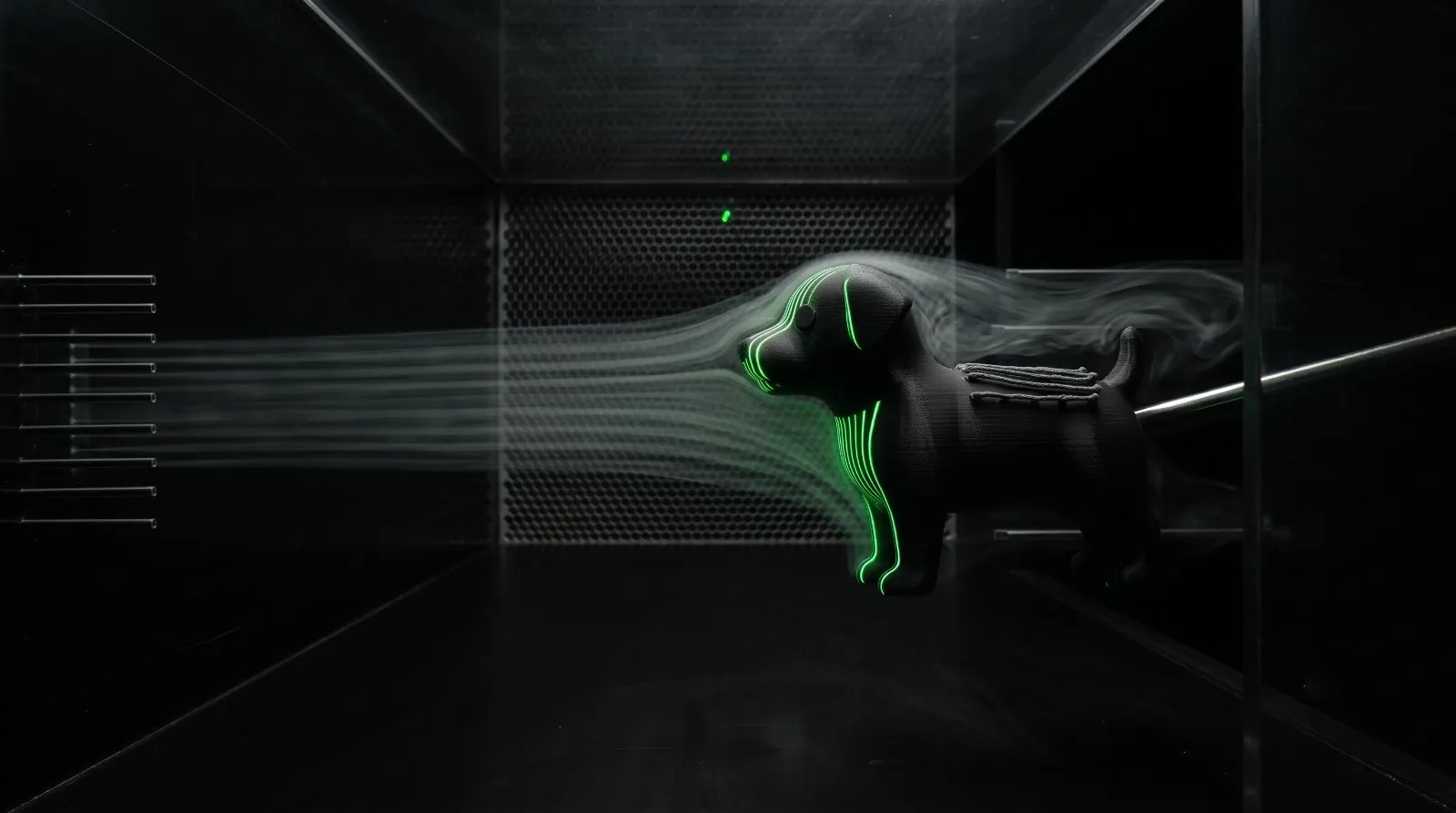
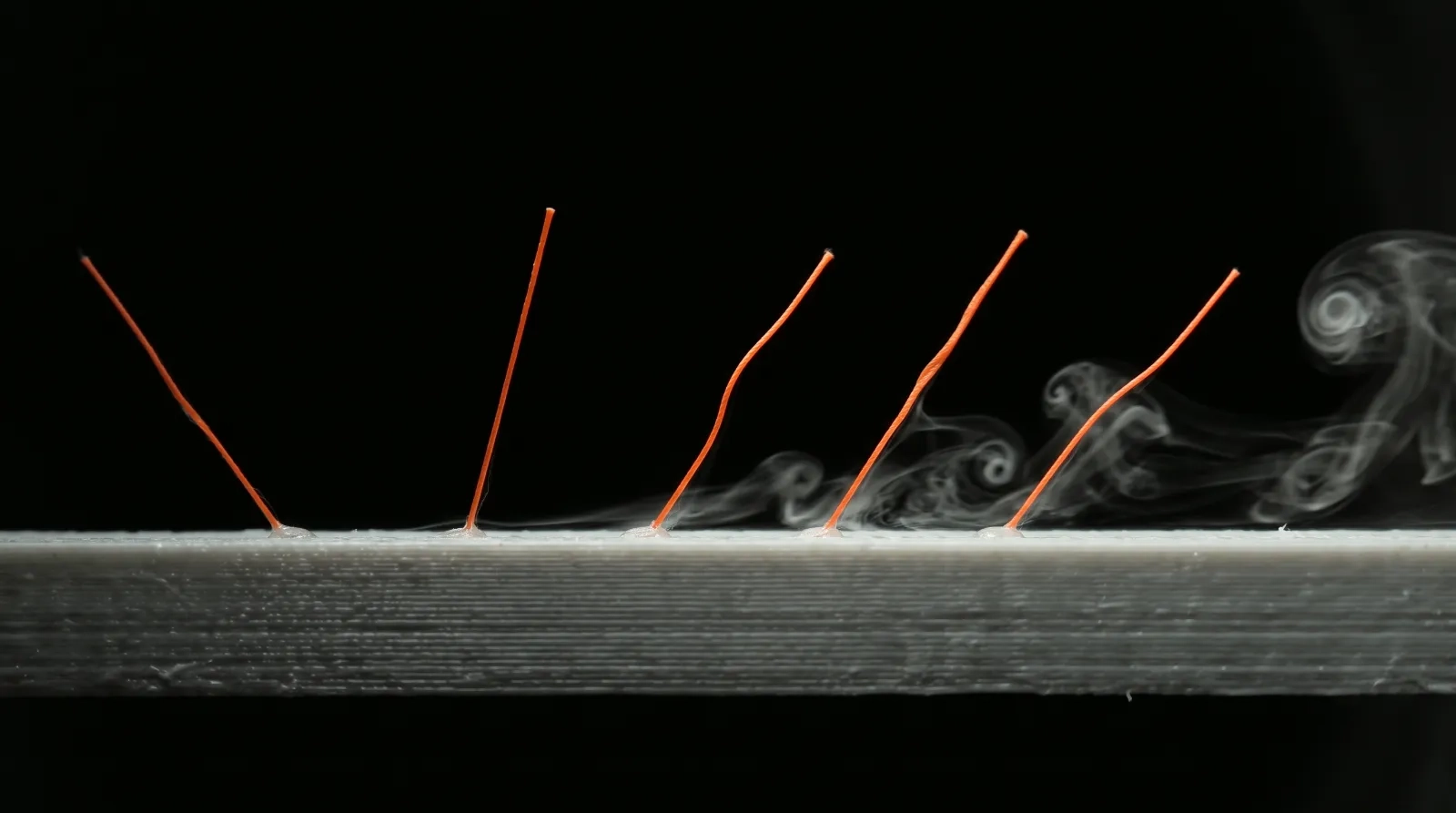
Mount the meme token on a sting. Turn on the wind. Read the number.
Tuft reads Robinhood Chain (chain ID 4663, an Arbitrum Orbit L2 launched July 2026) and returns pools, prices, liquidity, holder distribution and on-chain ownership flags as machine-readable records, every field stamped with its reference block. Right now the top {{ poolsScanned }} pools hold {{ activeTokens }} actively traded tokens and {{ vol24 }} of 24h volume — enough for real call traffic, young enough that the parsers are still being written. The test article is a plastic dog; the tunnel is calibrated like it were a wing.
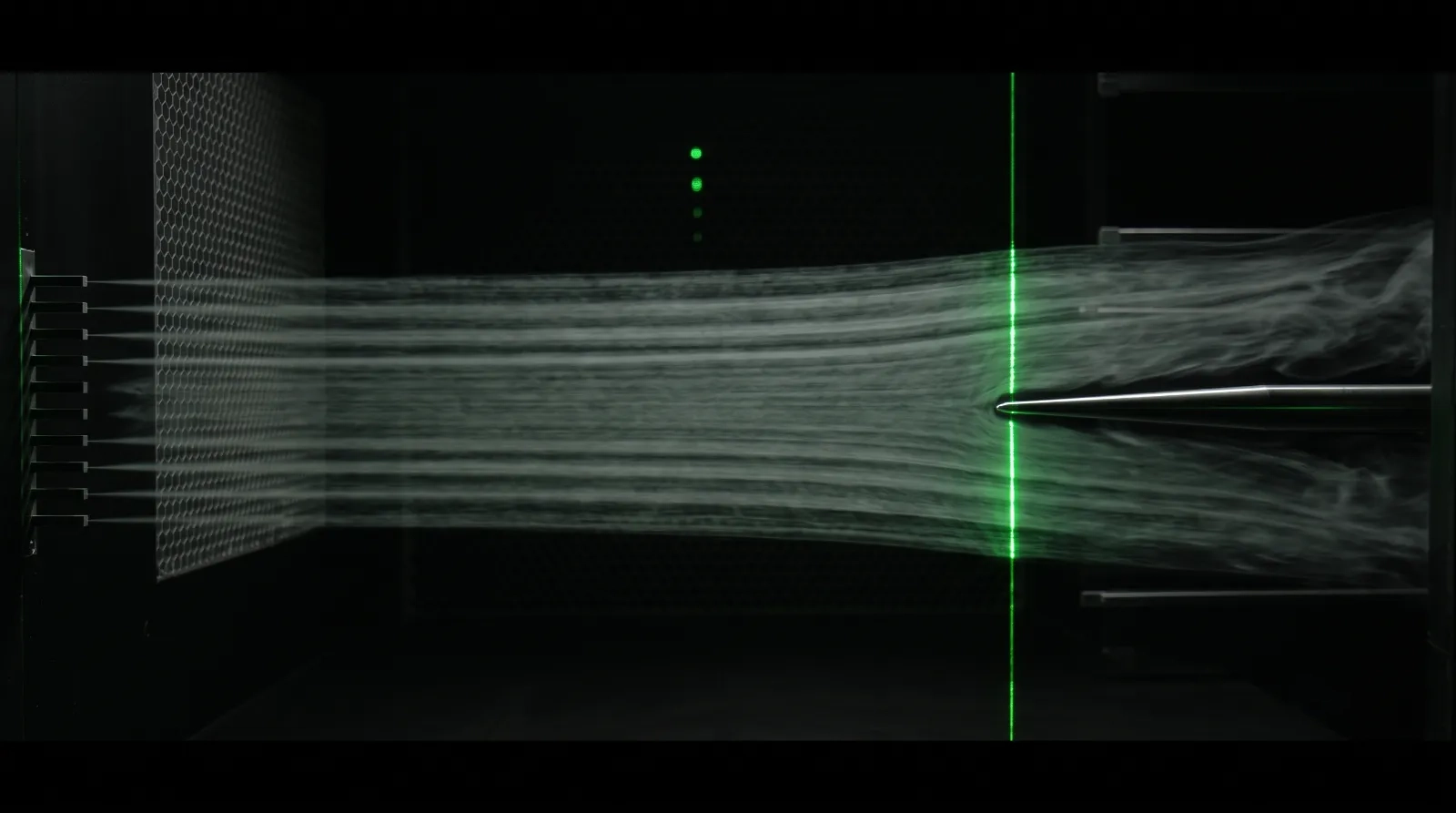
One node, every pool, replayable from any block.
The pipeline tracks swaps, LP mint/burn, token transfers and newly created pools. Reorgs are handled by replay from a safe block, never patched by hand. History is backfilled from genesis — a part you cannot buy later, only accumulate by having run the node earlier.
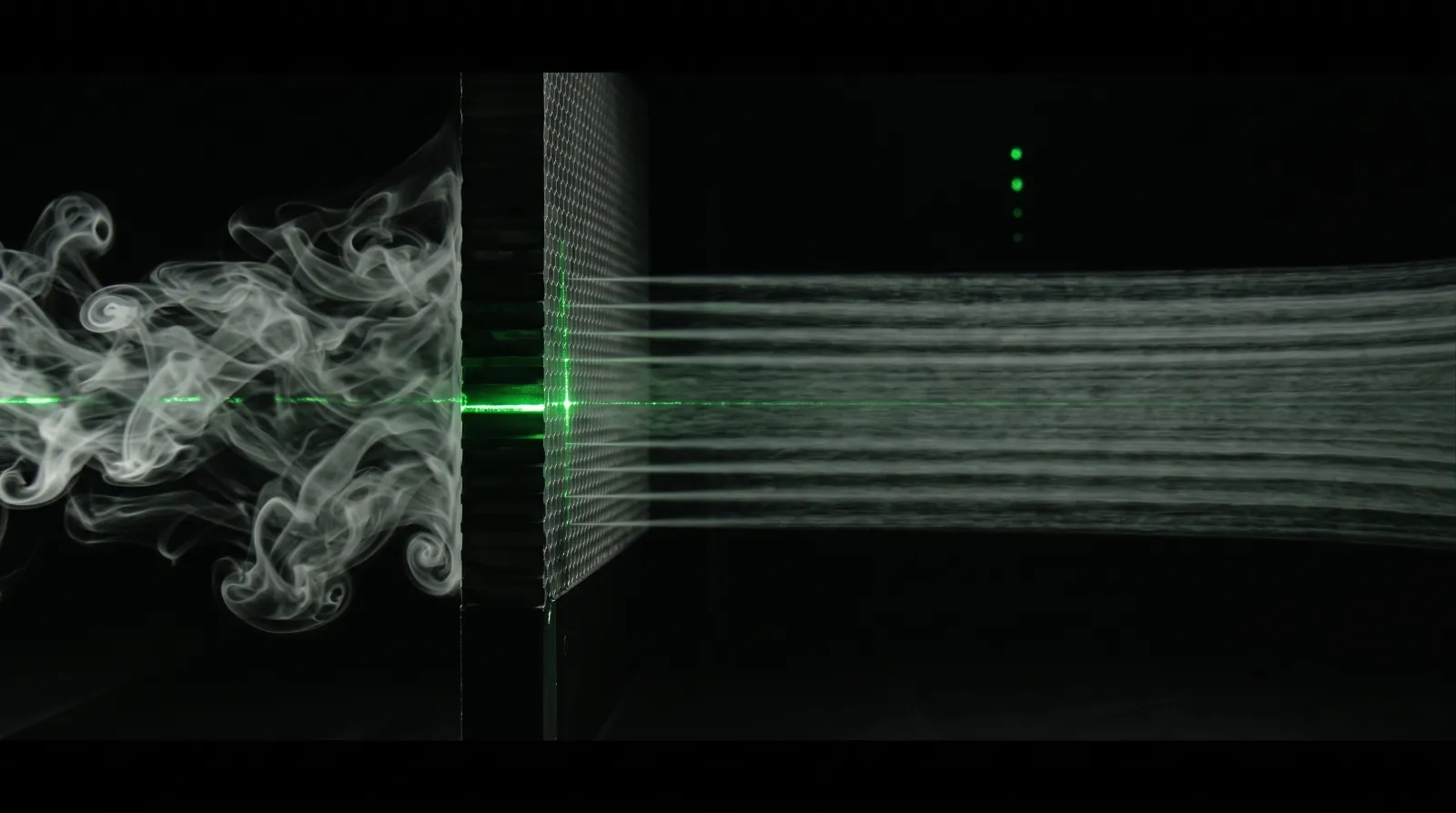
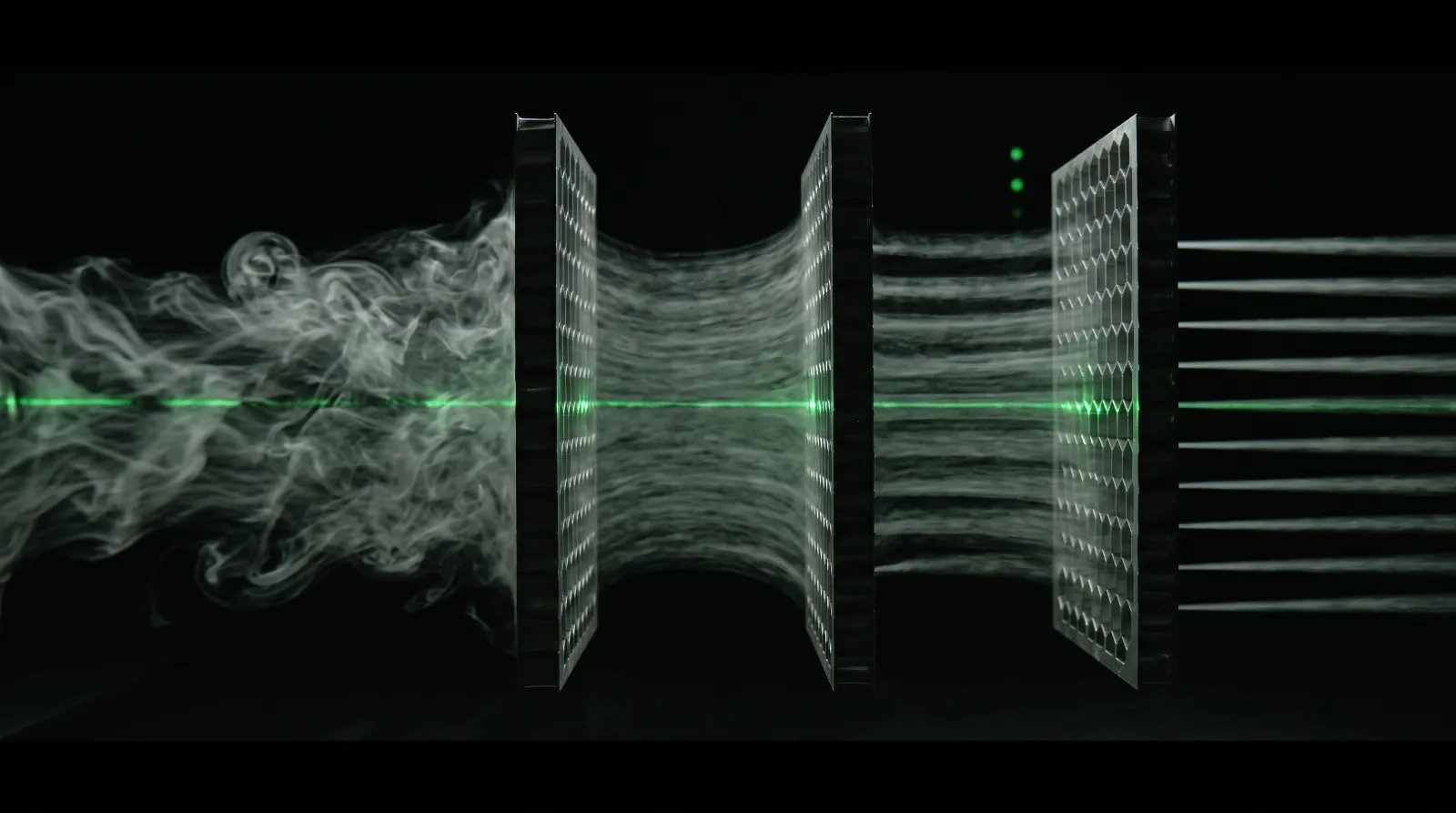
A honeycomb at the inlet: turbulent in, parallel out.
The token / pool / trade / holder model maps closely to the field names and types you already integrated for other chains. Integration is swapping an endpoint, not rewriting the data layer. Open-source TypeScript and Python SDKs ship with adapters, pagination and backoff. Schema is versioned; migration windows are published in the changelog.
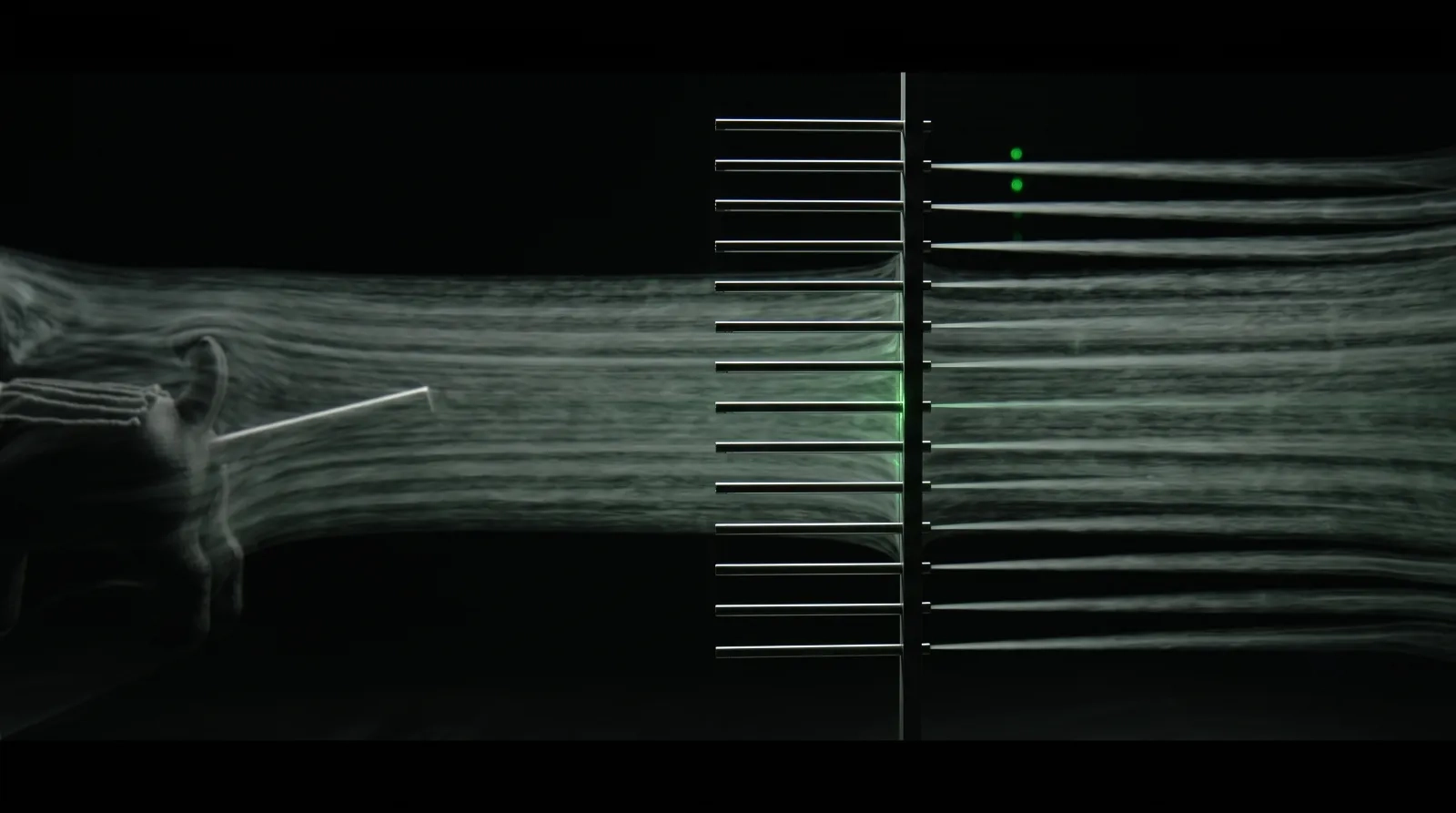
REST for tables. WebSocket for screens that may not drift.
Token list, token detail, pool list, OHLCV by timeframe, paginated trade history. A push channel for trades, liquidity changes and new pools — subscribe by token, pool or wallet. The segment underneath, measured live: {{ activeTokens }} active tokens, {{ liq }} pooled liquidity, {{ vol24 }} 24h volume across the top {{ poolsScanned }} pools. Call traffic comes from that trading, not from a token price.
Flags read straight from state. No score. No “safe” label.
Mint authority open or revoked, LP locked and until which block, share held by the largest wallet cluster, pool age, share of supply sitting in the pool. Each flag returns with its observed block. This is where launchpads on the chain have minted tens of thousands of tokens in a day — many tokens, few ways to tell them apart. We return facts; interpretation belongs to your product.
Silent error is an existential bug. So we say it out loud.
A scheduled job compares pool balances, total supply and holder shares computed by the indexer against state read directly from the node. Past threshold, the response is marked stale at that field — no quietly returning old numbers. The public status page shows uptime, index lag behind chain head and error rate. When flow separates, we write “flow separated”, with the time and sample code — not “minor disruption”.
Questions engineers actually ask
How is Tuft different from DEX Screener, Phantom or a trading terminal?
Different layer. They sit at interface and order execution and compete for end users. Tuft sits underneath, at the data layer, and sells to them. No discovery tab for you to compete with, no custody, no order routing. Our public dashboard exists so you can reconcile our data with the explorer before signing anything — it calls the same API you will.
How long from opening the page to the first response?
Sign up with a company email, take a free-tier key on the page, paste the curl from the docs. No sales step. The free tier has enough rate limit to build a staging integration and backfill a few tokens. When you turn it on for real users and hit the ceiling, the pricing page is right there — upgrade by card or stablecoin. SLA contracts and call commitments come later, when you need remedies rather than a trial.
Is the risk endpoint investment advice?
No. It returns observable on-chain events with a reference block: mint authority state, LP lock horizon, share held by large wallets. We deliberately return no composite score and attach no judgement label, because a single number gets read as advice. We require customers to show source and data timestamp when integrating into a swap screen.
What happens when the feed is wrong or late?
The reconciliation job catches the drift first, the response is marked stale, internal alerts fire, the incident lands on the status page with time and affected block range. Under an SLA contract the remedy is service credit against measured metrics — uptime, index lag, error rate — not an apology email. Serving logs are retained to reconstruct the exact response returned at the disputed moment.
What if attention on this chain cools?
A real risk and we do not hide it: narrative spread is at 34%, mentions moved 42% in 24h, and the last window logged only 25 mentions. That is why the chain parser is separated from the schema and serving layers from day one — adding a second chain is writing an adapter, not rebuilding the system. Tuft issues no token, so we add no supply to a chain already at density 76.52, and you hold nothing to call the API. While the chain trades, the feed gets called; if it stops, we say so instead of selling an expansion pack.
Tuft is read-only infrastructure. It holds no user assets, executes no orders, issues no token and gives no investment advice. Every figure on this page carries a measurement date and a reference block; numbers without a measurement are labelled “not yet measured”. Placeholder legal text — to be replaced by the legal team.